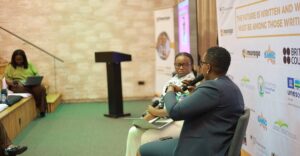
When Minister Jean Damascène Bizimana stepped onto the stage during the 18th Annual Forum of Unity Club Intwararumuri on November 8, he carried with him a message of hope — and hard evidence of progress.
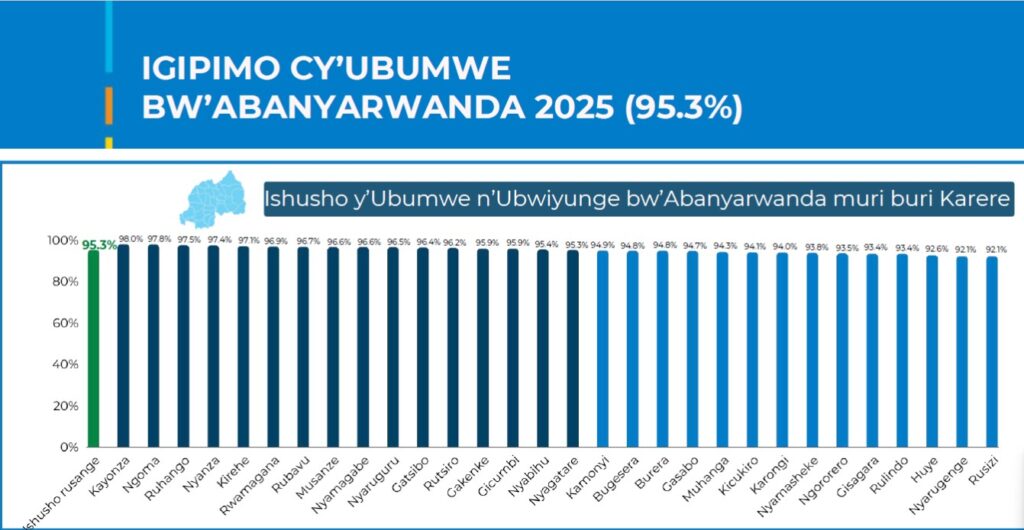
According to the latest National Unity and Reconciliation Barometer, unity and reconciliation among Rwandans now stand at 95.3 percent. It’s a number that tells a powerful story of a nation continuing to rebuild trust, solidarity, and resilience more than three decades after the 1994 Genocide against the Tutsi.
“This is a commendable achievement,” Bizimana said as he presented the findings on behalf of the Ministry of National Unity and Civic Engagement. “The barometer has shown steady improvement, from 82.3 percent in 2010 to 92.5 percent in 2015, and now 95.3 percent in 2025.”
A steady climb toward togetherness
The new barometer reveals a 0.6 percent increase from the 94.7 percent recorded in 2020. While the growth may seem gradual, it represents years of collective effort — from government institutions to families and communities — to foster peace and shared purpose.
First introduced in 2010, the barometer serves as a mirror reflecting Rwanda’s ongoing journey toward national healing. It measures the state of unity, reconciliation, and resilience among citizens, helping policymakers understand what works, what doesn’t, and where more work is needed.
Three pillars of a stronger nation
The 2025 edition takes a broader view by organizing its findings around three interconnected pillars: Unity, Reconciliation, and Resilience.
“Unity and reconciliation remain the main pillars because they relate directly to social relationships, our shared history, and the collective efforts Rwandans have made to rebuild themselves after the Genocide against the Tutsi,” Bizimana explained. “Resilience was added because it is the foundation upon which unity and reconciliation are built.”
This year’s survey reached 12,300 respondents across Rwanda — from farmers and teachers to religious leaders and young people — ensuring that the data represents voices from all walks of life.
Lingering Shadows
Yet, beneath the encouraging statistics lie reminders that the journey is not over. The study found that 23 percent of respondents believe Genocide ideology still exists in their communities, while 38 percent say ethnic or discriminatory ideas persist among some individuals.
Even more striking, 45.1 percent said that emotional wounds from the Genocide remain unhealed — particularly among survivors. A 2023 Unity Club study echoed this, showing that healing among youth survivors stands at only 31 percent.
Bizimana expressed particular concern about social media platforms that spread misinformation about Rwanda’s history. “Some platforms, operating from outside the country, continue to twist facts and undermine the unity we have built,” he said.
Building the next chapter
To keep Rwanda’s unity strong, the barometer recommends key actions, including:
Promoting Rwandan values and culture among youth through teaching Kinyarwanda and national history; Encouraging young people to participate in community initiatives that foster unity; Supporting open local dialogues that allow honest conversations about Rwanda’s past and collective future.
For Bizimana, these steps are not merely policy suggestions — they are moral imperatives. “The progress we see today is the result of deliberate policies that bring Rwandans together,” he said. “But there is still work to do to ensure that no remnants of division or discrimination are allowed to take root again.”