By Jean de Dieu Ndayisaba
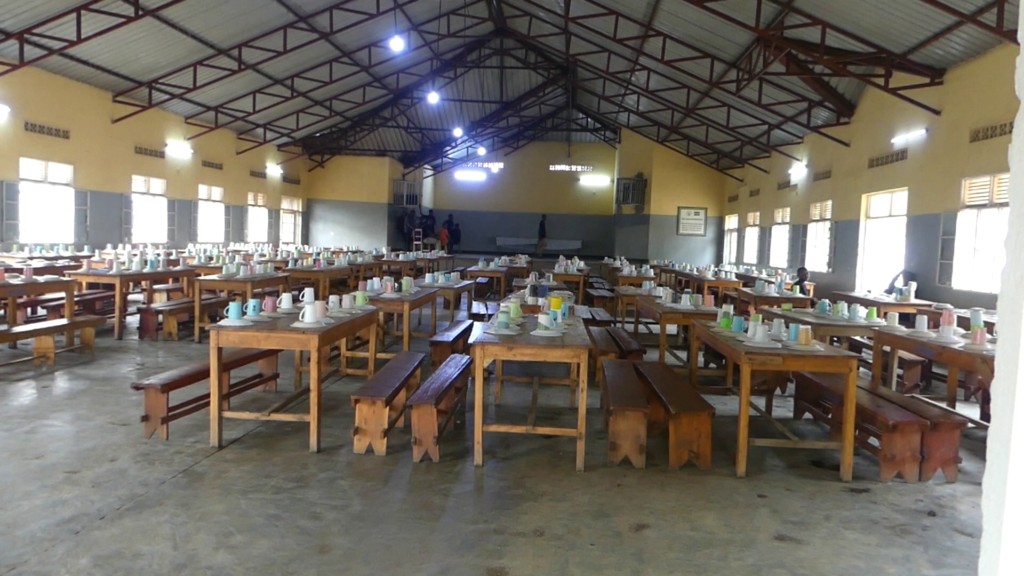
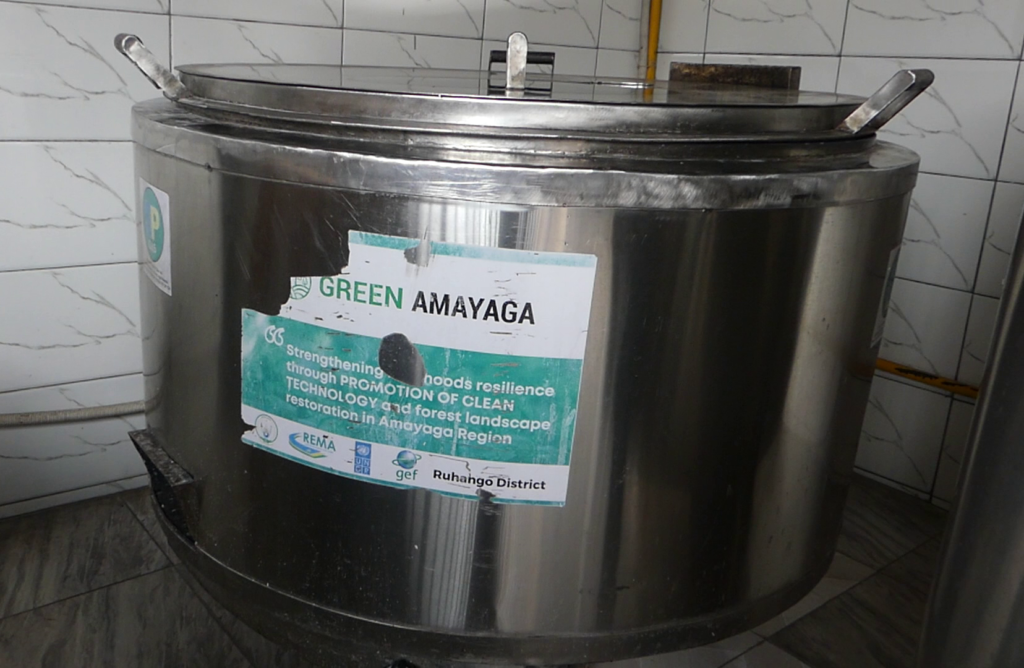
Ruhango Secondary school in Ruhango district says it now saves up to rwf 500,000 each term after receiving cooking gas from the Green Amayaga Project, significantly reducing the cost of firewood and improving hygiene in the school’s kitchens. The Rwanda environment management authority (REMA) also notes that the intervention is helping protect local forests that had been under pressure from excessive firewood harvesting.
According to Munyaneza Jean Claude, headteacher of Ruhango Secondary School, the institution is among five schools in the district that received gas equipment under the project. He explains that the school previously consumed 300 to 350 steres of firewood per term, but after adopting gas for cooking, the usage has dropped to about 100 steres.
Munyaneza says the shift did not only solve the problem of scarce firewood but also improved cleanliness in the kitchen and reduced food wastage, which used to occur when meals especially rice burned due to uncontrolled wood fire.
“Previously we used between 300 and 350 steres per term. Now we only use around 100 steres and the rest is covered by gas. In monetary terms, although prices fluctuate, we save between 500,000and700,000RWF per term,” he said.
“When you cook rice on a wood-fired stove, you always lose two or three pots because the heat can’t be controlled like with gas.”

Shumbusho Jean Baptiste, one of the school cooks, says gas stoves have made their work easier and solved delays caused by wet or low-quality firewood.
“Sometimes firewood would fail us coming in damp, producing too much smoke, and causing delays. A meal that should be ready by midday would be late. But with gas, when we start cooking at 9 a.m., everything is ready by 11 a.m.”
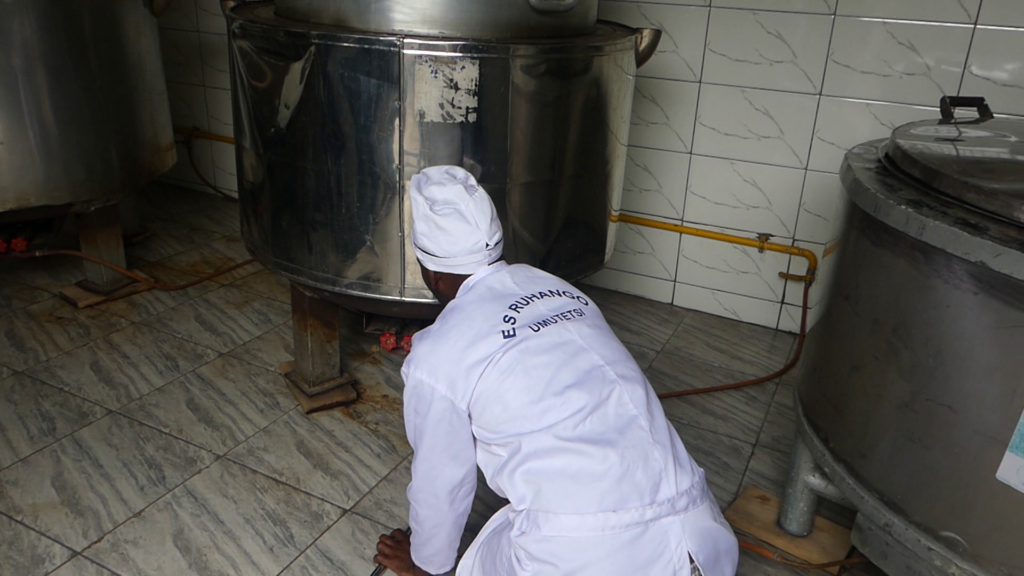
Songa Remmy, the Green Amayaga Project coordinator, says providing gas to schools has reduced the cutting of forests, which had become strained due to the high demand for firewood.
“Before supporting these five schools, there was a serious shortage of firewood in the area. Trees, both natural and planted, were being cut prematurely. Some schools even sourced firewood from other districts. The introduction of gas has eased this pressure and helped conserve forests,” he said.
Currently, the school uses gas to cook most meals except maize four pastry and beans, which still require some firewood. The administration says it consumes 1.7 tonnes of gas per term, an amount they describe as cost-effective compared to when they relied entirely on firewood.