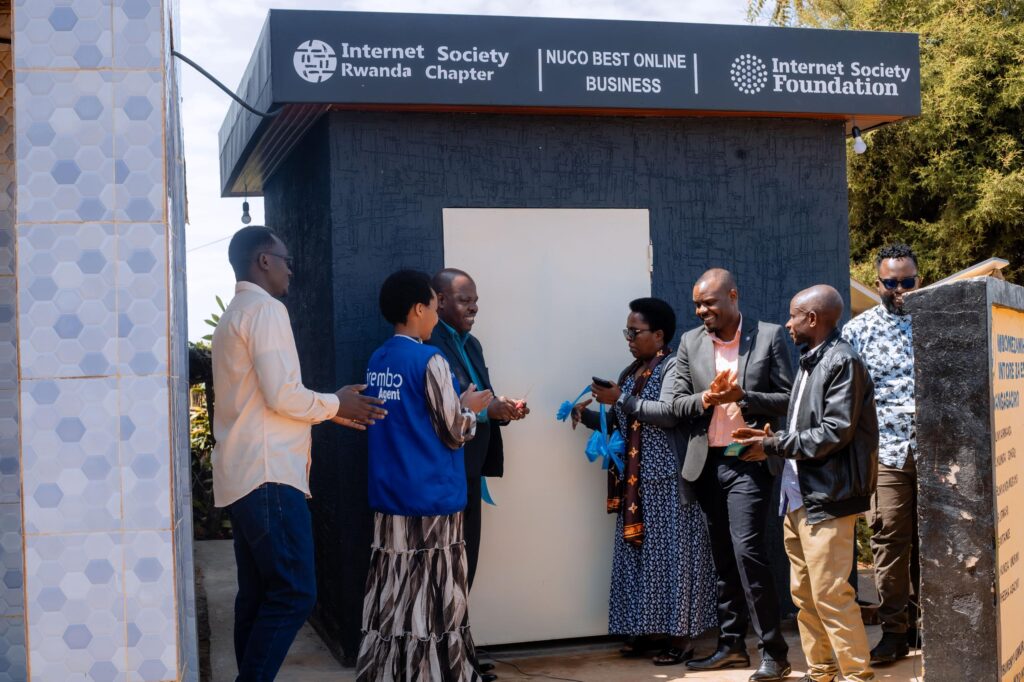
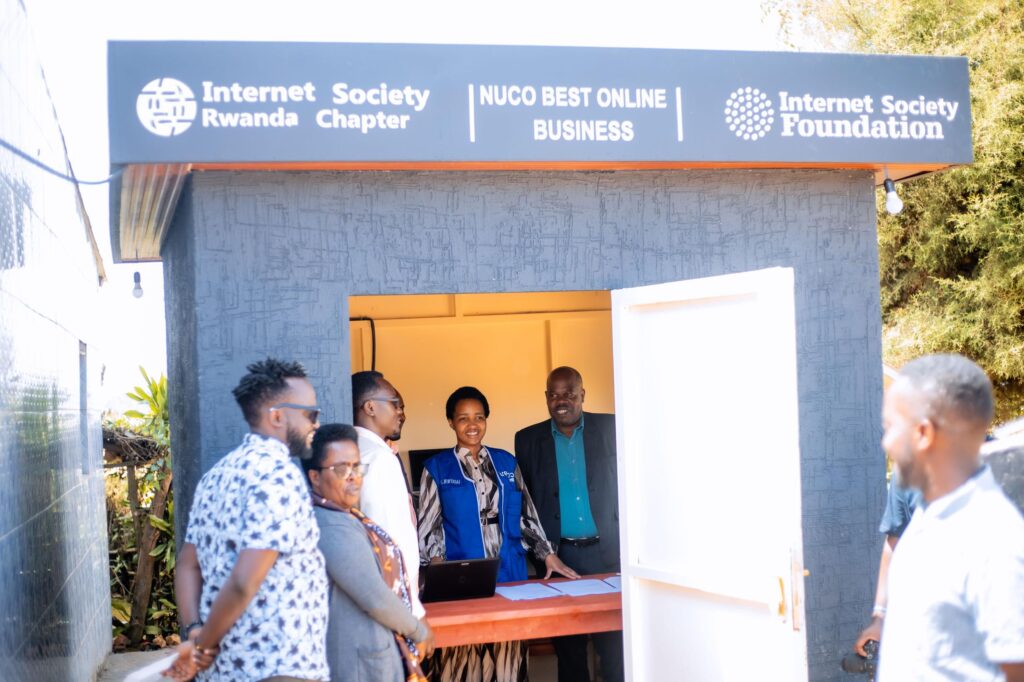
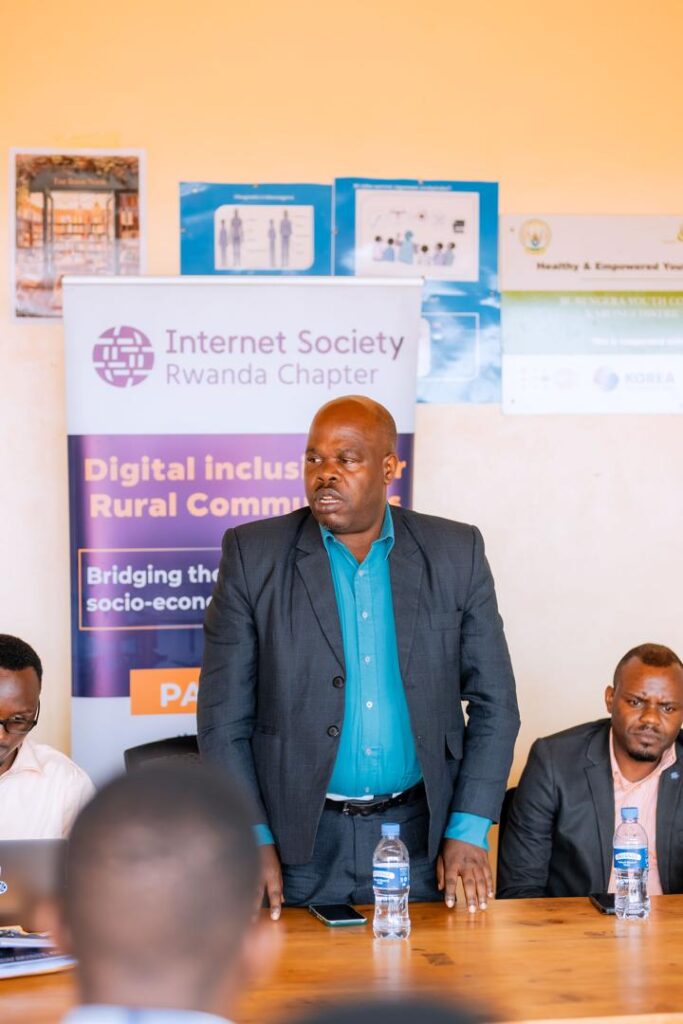
The Internet Society Rwanda Chapter (ISOC Rwanda) officially launched Nuco Best Online Business, a community digital kiosk in Gasenyi village, Byogo Cell, Karongi District, on Wednesday, December 10, 2025, marking a milestone in efforts to expand digital access and skills in rural areas.
The event brought together local officials, youth representatives, and community leaders to witness the opening of the facility, which is part of the Digital Inclusion for Rural Communities (DI4RC) Project—a nationwide programme aimed at reducing the digital divide between rural and urban areas.
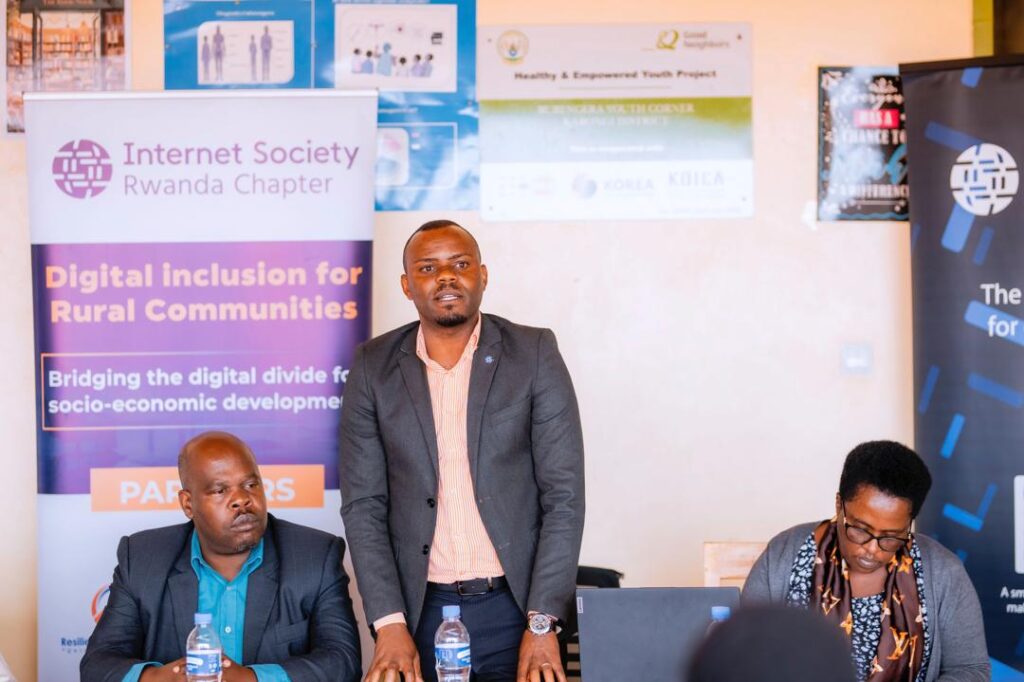
ISOC Rwanda Chairperson Emmanuel Mfitumukiza described the launch as a step forward for community development.
“The internet is a powerful channel that can transform lives and expand opportunities for everyone,” he said. “We are committed to tackling the digital divide because rural communities are still being left behind.”
The launch also celebrated young beneficiaries, with Consolee Nuwayesu taking center stage. As the kiosk’s main operator, Consolee has become a leading example of how digital hubs can empower rural youth.
“Before this project, it was difficult for people here to access online services or earn income through digital work,” she said. “Today, residents can process government documents, make mobile money payments, pay school fees, and access information without travelling far. This kiosk has changed our daily lives and given me a sustainable source of income.”
Albert Ntabareshya from Karongi District’s ICT Unit highlighted the importance of digital inclusion under the government’s NST2 development plan.
“We encourage you to use the skills you have gained to support those who were not trained and help your communities access services more easily,” he said.
A total of 17 young people from Karongi who were selected from over 50 applicants to participate in DI4RC training, received certificates during the launch. Their training follows the model used in Nyagatare, where youth now operate the Gatunda Digital Hub, assisting residents with government platforms, online payments, and digital literacy services.
The event concluded with community leaders urging continued support for youth with no IT background, ensuring the programme remains inclusive.