
By Jean de Dieu Ndayisaba
Residents of border sectors in Rusizi District, particularly those near Rwanda’s frontiers with the Democratic Republic of Congo (DRC) and Burundi, have raised concerns that harmful cultural practices imported from neighboring countries continue to undermine human rights in the area. Among the most cited issues is polygamy, which often results in children being denied their right to legal identity due to lack of birth registration.
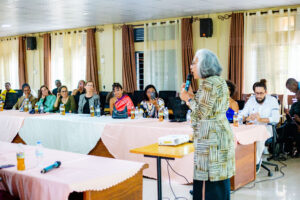
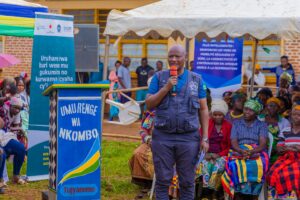
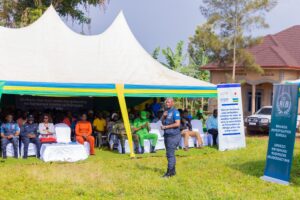
The concerns were expressed on December 4, 2025, during a community outreach event organized by the National Commission for Human Rights (NCHR) in Bugarama Sector. The engagement was part of a nine-day awareness campaign being conducted in Rusizi and Nyamasheke districts ahead of the International Human Rights Day, marked annually on December 10.
The human rights sensitization session was combined with a football match between Bugarama and Muganza sectors, which ended with Muganza securing a 1–0 victory. Organizers said the use of sports was intentional, as it attracts large crowds and creates an effective platform for civic education.
Patrick Niringiyimana, the Executive Secretary of Muganza Sector, explained that sports activities help local leaders reach many residents at once and deliver important messages about human dignity and fundamental freedoms.
“Through sports, we easily gather people and remind them of their right to life and good health,” he said. “This area is densely populated and experiences high temperatures, so we also emphasize that everyone has the right to live anywhere within the country and to engage in activities that promote well-being, such as sports.”
However, Niringiyimana acknowledged that proximity to international borders presents unique challenges. He noted that certain social practices from neighboring countries, including polygamy, continue to affect families in the area.
“In polygamous households, children often suffer the consequences,” he said. “Some grow up without legal documentation and remain unregistered even into adulthood, simply because of the circumstances of their birth. Yet registration is their fundamental right.”
He further pointed out that beliefs in witchcraft, another practice linked to cross-border cultural influence, have led to discrimination and violence against suspected individuals.
“Unproven accusations can strip someone of their right to live peacefully, as communities may turn against them. We continuously remind residents that every person has the right to life,” he added.
Francis Kaboneka, a Commissioner at the National Commission for Human Rights, said the outreach aimed to reassure border communities that they are equally valued and protected by the government, while also discouraging harmful foreign influences.
“Although this area is geographically remote, we wanted residents to clearly understand their rights,” Kaboneka said. “Living near borders exposes communities to external practices, and without awareness, people may adopt behaviors that violate human rights.”
Kaboneka also urged residents to actively combat child abuse, human trafficking, and drug-related activities, which have been reported in the region and pose serious threats to human rights.
The NCHR awareness activities in Rusizi and Nyamasheke began on December 2 and will conclude on December 10, coinciding with International Human Rights Day. The program will also feature a final football match bringing together the best-performing sector teams from both districts.